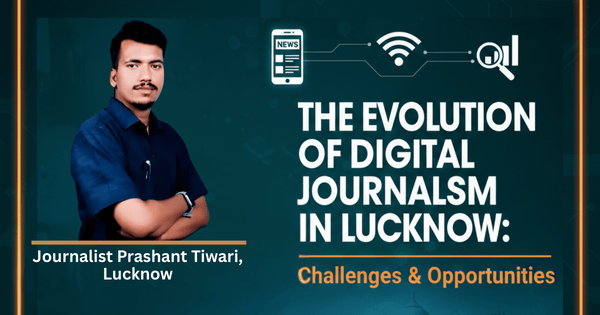
The Evolution of Digital Journalism in Lucknow: Challenges & Opportunities
Prashant Tiwari is a prominent Journalist in Lucknow, specializing in digital media strategies and investigative reporting.
BLOG
Journalist Prashant Tiwari
2/16/20263 min read
Lucknow, a city historically celebrated for its Tehzeeb (culture) and slow-paced elegance, is currently undergoing a rapid digital metamorphosis. For years, the heartbeat of this city was found in the rustle of morning newspapers and the steady hum of evening radio bulletins. However, as a professional observing the frontline of this change, I, Prashant Tiwari, have witnessed a profound shift. The ink is being replaced by pixels, and the deadline has shifted from "overnight" to "instant."
This evolution of digital journalism in Lucknow is not merely a change in medium; it is a total restructuring of how news is produced, consumed, and verified in the heart of Uttar Pradesh.
The Digital Dawn: A Personal Perspective from the Field
I remember a time when reporting a political rally at Vidhan Sabha required rushing back to a newsroom, drafting a report, and waiting for the next day's print. Today, as I stand on the streets of Lucknow, my smartphone is my entire newsroom. Whether I am filing a report for prashanttiwari.in or broadcasting a live update, the distance between the event and the audience has shrunk to zero.
Digital journalism in Lucknow gained significant momentum with the rise of affordable data and smartphones. What started as simple Facebook updates has evolved into sophisticated news portals and multimedia platforms. Organizations like Nipun Bharat Samachar, where I have contributed my insights, represent this new era where local voices no longer need a billionaire’s printing press to be heard across the globe.
The Challenges: Navigating the Chaos of the Digital Age
While the digital shift has democratized news, it has also brought forth a set of challenges that every serious News Reporter in Lucknow must navigate daily.
1. The Pandemic of Misinformation: This is perhaps the greatest hurdle. In the race to be "first," accuracy often takes a backseat. In Lucknow, local rumors can escalate into "breaking news" within minutes on WhatsApp groups. As Journalist Prashant Tiwari, my primary battle is often not just reporting the truth, but actively debunking the viral lies that cloud public perception.
2. The Crisis of Credibility vs. Clicks: The digital economy thrives on engagement. This creates a dangerous pressure to produce "clickbait" headlines. For independent portals in Lucknow, the struggle is real: how do you maintain high journalistic standards while competing with sensationalist content that garners more views? Sustainability without compromising integrity is a tightrope walk.
3. The Digital Divide and Literacy: Despite the smartphone boom, a significant portion of Lucknow’s population—especially in peri-urban areas—still lacks digital literacy. This creates an information vacuum where the rural poor may be left behind by the digital-first approach of modern media houses.
4. Ethical Dilution: With everyone becoming a "citizen journalist," the traditional ethics of journalism—cross-verification, neutral sourcing, and respect for privacy—are often ignored. It becomes the responsibility of established figures like me to set a benchmark for what professional digital reporting should look like.
The Opportunities: New Horizons for Lucknow’s Media
Despite these hurdles, the opportunities for digital journalism in Lucknow are boundless.
1. Global Reach for Hyper-Local Issues: Previously, a civic issue in a small colony of Old Lucknow would rarely make it to the national headlines. Now, a well-investigated digital report can catch the attention of policymakers globally. Digital platforms have given Journalist Prashant Tiwari the power to take local grievances to a massive audience.
2. Data-Driven Investigative Journalism: The digital age provides tools for deep-dive reporting that were previously unavailable. Analyzing government spending, tracking urban development in Lucknow, and presenting them through interactive infographics is now possible. This makes news more transparent and easier for the common man to understand.
3. Direct Engagement and Accountability: One of the most rewarding aspects of digital journalism is the two-way communication. When I publish a piece on prashanttiwari.in, the feedback is immediate. This direct dialogue with the people of Lucknow makes us, as journalists, more accountable and keeps us grounded in the reality of the people we serve.
4. Multimedia Storytelling: We are no longer limited to just text. Through podcasts, short-form videos, and photo essays, we can tell the story of Lucknow in a more immersive way. The cultural heritage of our city, the political shifts, and the social changes can be captured in vibrant detail, appealing to the younger, tech-savvy generation.
5. Niche Reporting: Digital platforms allow for specialization. In Lucknow, we are seeing the rise of journalists who focus exclusively on the city’s environment, its unique culinary history, or its judicial developments. This specialization adds immense value to the media ecosystem.